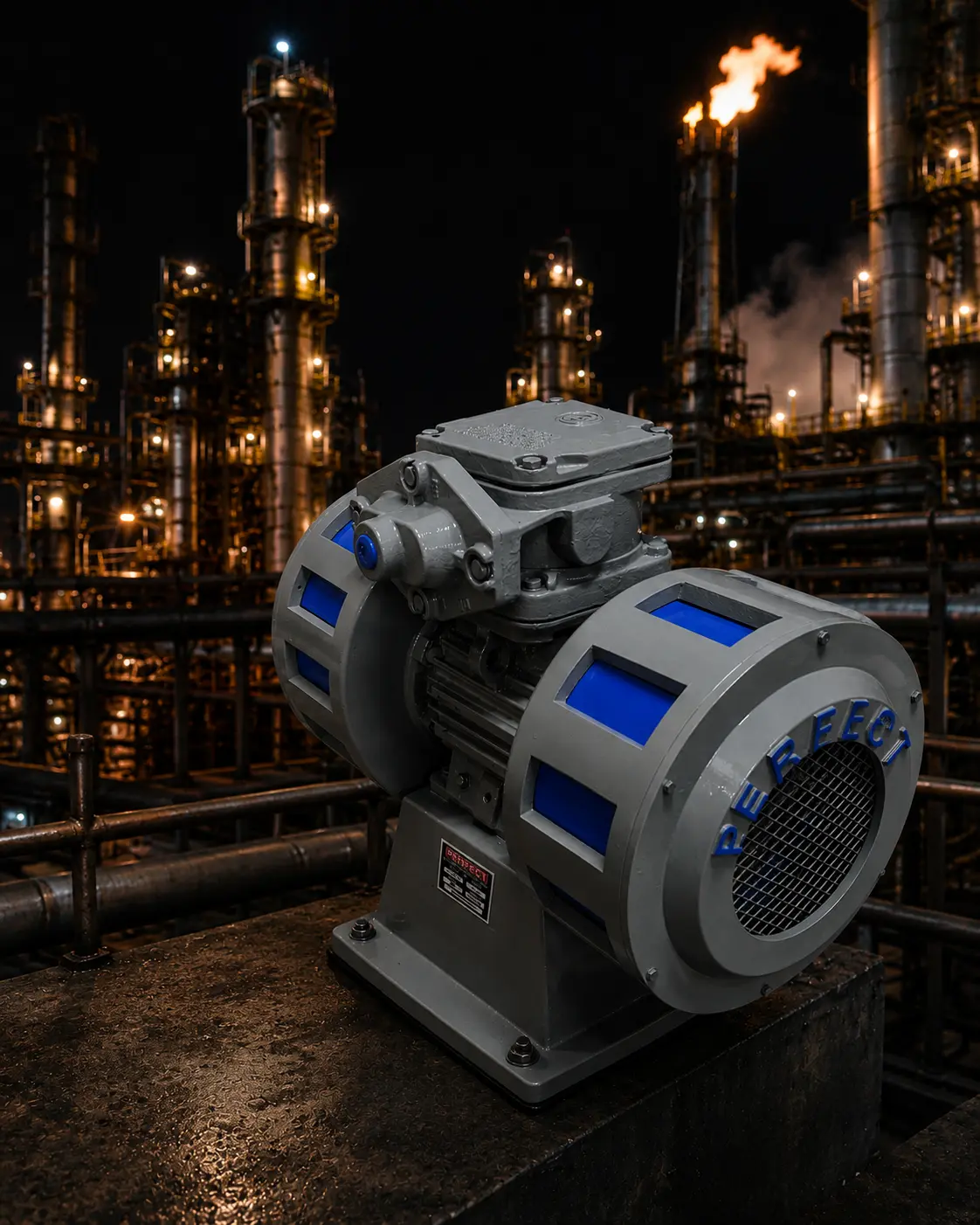
Flameproof Sirens — PESO & CIMFR Certified — Zone 1 & Zone 2 Hazardous Area Approved
Hazardous Area Certified

Built for Zones
Where Sparks Mean Disaster.

PESO and CIMFR certified flameproof sirens and hooters for Zone 1 and Zone 2 hazardous areas. Explosion-proof Ex-d enclosure rated for use in the presence of flammable gases and vapours.

Ex-d
Enclosure Rating
PESO
Certified
CIMFR
Tested
Zone 1/2
Approved Use
Flameproof Siren — Ex-d Enclosure Cross-Section
Hazardous Area Zone Classification Zone 0 — Gas present continuously Inside tanks, vessels — flameproof Ex d IIC T6 required Zone 1 — Gas likely during normal operation Pump rooms, compressor areas — PESO/CIMFR cert required Zone 2 — Gas unlikely, brief if present Storage areas, plant perimeter — flameproof recommended Safe Area — No explosive atmosphere Standard motor siren or electronic hooter
PESO and CIMFR certified flameproof siren for Zone 1 and Zone 2 hazardous areas, petroleum refinery, India
Certification
PESO & CIMFR certified
Zone
Zone 1 & Zone 2
Ex rating
Ex d IIC T6
Power supply
24V DC / 230V AC / 415V AC
Output
105–115 dB at 1 metre
Enclosure
Copper-free cast aluminium, IP66
Why Standard Sirens Fail Here

What "Flameproof" Actually Means

A flameproof (Ex-d) enclosure does not prevent gas from entering the device. It is designed so that if an internal spark ignites gas inside the enclosure, the explosion is contained — the flame cannot escape to ignite the surrounding atmosphere. This is achieved through certified flame-path gaps, robust cast construction, and pressure-tested joints.

Why Standard Sirens Are Dangerous Here

Standard motor sirens have carbon brushes that spark continuously during normal operation. Standard electronic sirens have switching circuits, relays, and transformers that can produce arcs or excessive surface temperature. In an atmosphere containing flammable gas or vapour, either of these can trigger an explosion.

Installing a standard (non-certified) siren in a hazardous area is not just a compliance violation — it is a direct safety hazard that can cause the exact disaster the siren exists to warn against.

Engineering Insight

Gas Groups & Temperature Class

Flameproof equipment is certified for specific gas groups and temperature classes. Gas Group IIA covers propane-type gases, IIB covers ethylene-type, IIC covers hydrogen — each requiring progressively tighter flame-path tolerances. Temperature class (T1–T6) defines the maximum surface temperature the equipment can reach, ensuring it stays below the auto-ignition temperature of the gases present.

  • Identify the specific gas groups present at your site before ordering
  • Confirm required temperature class based on auto-ignition temperature of process gases
  • Verify Zone classification (Zone 0/1/2) from your hazardous area classification drawing
  • Flameproof gland must match cable type and area classification
  • Earthing bond resistance must be verified at commissioning
  • Never modify or open a flameproof enclosure without isolating power and area gas testing
Zone Classification

Understanding Hazardous Area Zones

Hazardous areas are classified by how often and how long an explosive atmosphere is likely to be present.

Zone 0

Continuous Hazard

Explosive atmosphere present continuously or for long periods. Inside storage tanks, process vessels. Requires highest protection level (Ex-ia, intrinsically safe).

Zone 1

Likely Under Normal Operation

Explosive atmosphere likely to occur during normal operation. Areas around loading bays, vent points, pump stations. Flameproof (Ex-d) equipment is suitable.

Zone 2

Unlikely, Brief if Occurs

Explosive atmosphere unlikely under normal operation, and if it occurs, only briefly. Wider perimeter areas around process units. Flameproof (Ex-d) equipment is suitable and commonly specified.

Our flameproof sirens are certified for Zone 1 and Zone 2 applications. Always confirm your facility's hazardous area classification drawing before ordering — this is typically prepared by your safety consultant or EPC contractor.

Certifications

Tested & Certified for Indian Hazardous Area Use

PESO Certified

Petroleum and Explosives Safety Organisation certification — mandatory statutory approval for use in Indian petroleum and gas facilities.

CIMFR Tested

Central Institute of Mining and Fuel Research testing — verifies flameproof enclosure integrity against Indian standard test protocols.

Specifications

Technical Specifications

Standard flameproof model specifications. Custom configurations available for specific gas group and temperature class requirements.

ParameterSpecification
Enclosure RatingEx-d (Flameproof)
Zone SuitabilityZone 1 & Zone 2
Gas GroupIIA / IIB (confirm at order)
Temperature ClassT4 / T5 / T6 (confirm at order)
CertificationPESO, CIMFR tested
Enclosure MaterialCast aluminium / cast iron
Sound Output90–120 dB depending on model
Power Supply24V DC / 230V AC / 415V AC (motor & electronic variants)
Cable EntryFlameproof certified gland
Protection RatingIP65 / IP66
EarthingExternal earth terminal mandatory
Warranty12 months from supply
FAQ

Flameproof Siren — Common Questions

Gas group depends on the specific gases or vapours present at your site. Most petroleum and refinery applications fall under Group IIA or IIB. Your hazardous area classification document (prepared by your safety consultant or EPC contractor) will specify the required gas group and temperature class. Share this with us and we will confirm the matching certified product.
No. Opening a flameproof enclosure in a hazardous area without proper gas-free certification and isolation procedures is dangerous and violates the certification. Any internal repair must be done by a certified flameproof repair facility, and the enclosure must be re-certified before reinstallation. For most factories, replacement of the unit is more practical than repair.
Sound output is comparable to the standard variant of the same siren type — the flameproof enclosure does not significantly reduce output, though there is a small reduction (typically 2–4 dB) due to the heavier cast housing. We size flameproof sirens with this in mind to ensure your coverage requirement is still met.
Yes. The entire installation in a hazardous area — cable, cable gland, junction boxes, and conduit — must be rated for the same zone classification as the siren itself. A flameproof siren with a standard (non-certified) cable gland defeats the purpose of the certification. We supply the matching flameproof gland with each unit.
Related

Complete the System

Need a PESO/CIMFR certified flameproof siren?

Share your zone classification, gas group, and cable entry size. We confirm the Ex d variant and supply test certificates.

Also see: Motor Siren →Automatic Factory Siren →Factory Warning System →
📄 PESO/CIMFR certificate details, dimensions & wiring →
WhatsApp Us