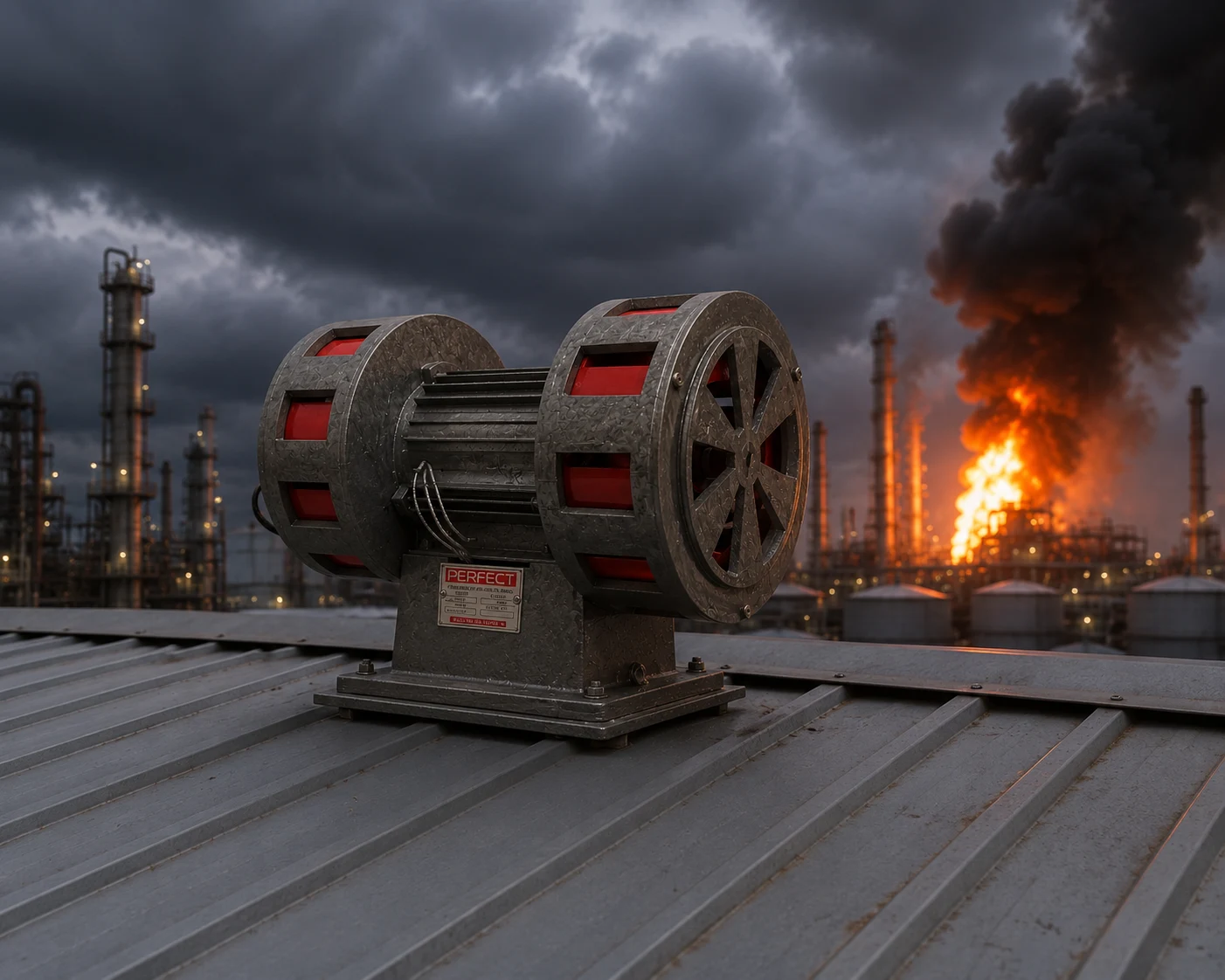
Factory Emergency Warning Systems — OISD & ERDMP Compliant — Complete System Design in 24 Hours
Complete System Solution

A Factory Warning System
That Works When It Must.

We don't sell sirens. We design complete factory emergency warning systems — zone coverage, siren selection, control panels, tone codes, and compliance documentation — as one engineered solution.

500+
Systems Installed
16+
Years Experience
24hr
System Design
Factory Warning System — Component Overview
Factory Warning System — Zone Layout Siren Controller Motor Siren Zone A — Outdoor Motor Siren Zone B — Outdoor Hooter Zone C — Indoor PA Speaker Zone D — Shop Floor Flameproof Zone E — Hazardous Outdoor signal Indoor signal
Industrial factory emergency warning system — fire siren, hooter, and evacuation alarm system for factory safety, India
Siren range
0.5–16 km depending on model
Controller
RTC scheduled, 25 events/day
Emergency
Wailing tone — OISD-117 compliant
Remote
GSM SMS trigger option
Multi-site
Distributed master/slave system
Voice
Hindi/English PA announcement
System Components

What a Complete Factory Warning System Includes

A warning system is not a single product. It is an assembly of components — each selected for the specific conditions at your site.

1

Zone Coverage Design

Acoustic zone mapping based on site layout, building positions, and ambient noise levels. Identifies coverage gaps before installation.

2

Siren Selection

Motor siren, electronic siren, hooter, or PA speaker — each zone gets the right device based on coverage requirement and environment.

3

Control Panel

Automatic scheduler, emergency buttons, manual override, event log — all in one OISD/ERDMP compliant siren control panel.

4

Compliance Documentation

OISD-117, ERDMP, IS 6026 — system design drawings, siren code definitions, test protocols, and audit-ready documentation.

Emergency Scenarios

One System. Every Emergency Covered.

A complete factory warning system handles every scenario with a distinct, pre-programmed response — no confusion, no ambiguity, no missed actions.

Fire Emergency

Automatic or manual trigger. All zone sirens activate simultaneously in wailing mode.

Wailing 30s ON / 15s OFF × 3 cycles

Shift Change

Scheduled daily activation. Distinct tone from emergency — workers never confuse the two.

Single 60s continuous wail — scheduled

Gas Leak / Disaster

Different tone pattern from fire. Triggers evacuation protocol in affected zone only or site-wide.

Wailing 2 min × 3 repetitions — 1 min gap

All Clear

Steady straight-run tone — signals hazard passed, safe to return. Distinct from all emergency tones.

Steady 120s continuous — no wail
Engineering Insight

Why Tone Differentiation Is a Safety Requirement, Not a Feature

When workers hear the same siren tone for a shift change and a fire alarm, they learn to associate it with a routine event. Over time, the emergency signal loses its urgency. OISD-117 mandates distinct, recognisable tone patterns for each emergency type precisely because of this alarm fatigue phenomenon. Every well-designed factory warning system uses at minimum 3 distinct tones — routine, urgent, and emergency. The ERDMP standard goes further, specifying exact wailing patterns for fire, disaster, and all-clear scenarios.

  • Minimum 3 tone codes: shift/routine, emergency, all-clear
  • Emergency tones must be audible at all plant boundary points
  • Shift change tone must be clearly distinguishable from emergency
  • Manual override always bypasses automatic schedule
  • Annual siren test with sound level measurement documentation
  • Backup power for siren panel — minimum 30 min battery backup

Our System Design Process

1

Site Survey & Noise Measurement

Measure ambient noise at all critical points during peak production. Identify coverage requirement for each zone.

2

Zone Map & Siren Placement

Design acoustic zones, select siren type and rating for each zone, determine optimal placement heights and positions.

3

Control Panel & Tone Code Design

Specify control panel type, siren code patterns, scheduling requirements, and integration with fire/DCS/SCADA systems.

4

Documentation & Compliance

Produce system drawings, BOM, siren code register, OISD/ERDMP compliance checklist, and installation specification.

Compliance

Standards We Design To

Every system we supply is designed against applicable Indian industrial safety standards — with documentation to prove it at your next audit.

OISD-117
Oil Industry Safety Directorate

Mandatory for all oil and gas facilities. Specifies emergency warning system design, siren tone codes, control panel requirements, and annual test protocols for refineries, depots, and pipeline stations.

ERDMP
Emergency Response & Disaster Management Plan

Statutory requirement under PNGRB regulations for city gas distribution and pipeline operators. Defines specific wailing patterns for fire, disaster, and all-clear scenarios with mandatory documentation.

IS 6026
Indian Standard — Hand Operated Sirens

Governs the specification and performance of hand-operated sirens used as backup or portable emergency warning in oil, gas, and process industries. Required at many oil company facilities.

Products in This System

The Components We Use — and Why

Each product is selected for a specific role in the system. We explain why we recommend what we recommend.

FAQ

Factory Warning System — Questions

Questions from plant heads, safety managers, and EPC contractors.

Request System Design
This depends on your factory footprint, ambient noise level during production, and building layout. The rule of thumb: divide your site into acoustic zones where each zone needs one siren capable of exceeding the peak ambient noise by at least 10 dB at its farthest point. For a typical 10-acre factory with 90 dB ambient noise, you likely need 2–4 motor sirens. We calculate this precisely using your site plan and noise measurements — share your details and we will design the coverage map.
Yes. Our Advanced Siren Control Panel accepts dry contact trigger inputs from fire alarm panels, gas detectors, and DCS/SCADA systems. When the fire panel triggers, the ASC panel automatically activates the appropriate siren pattern for the fire emergency scenario. This integration is standard on our OISD/ERDMP panels and is fully documented for compliance purposes.
Our system design proposal includes: zone coverage map with siren placement, siren model selection and ratings for each zone, control panel specification with siren code definitions, bill of materials with quantities, cable routing diagram, compliance checklist against applicable standard (OISD/ERDMP/IS 6026), and commercial offer with delivery timeline. This is provided at no charge as part of our pre-sales engineering support.
A standard 3–5 zone factory warning system — 2–4 motor sirens, 1 control panel, cabling — typically takes 2–4 days to install. This includes mechanical mounting, electrical wiring, panel commissioning, siren tone programming, and post-installation sound level verification. Larger systems with distributed actuation or more zones take longer. We provide a project-specific installation schedule with our proposal.
Yes. For Zone 1 and Zone 2 hazardous areas, we supply PESO and CIMFR certified flameproof sirens and hooters rated for use in the presence of flammable gases and vapours. The control panel is installed in the safe area. We have supplied to Indian Oil, BPCL, HPCL, ONGC, and GAIL facilities across India — each with the specific compliance documentation required for petroleum industry installations.

Need help designing your factory warning system?

Share your site layout and hazard zones. We design the siren network and quote within one working day.

Also see: Motor Siren →Automatic Factory Siren →Engineering Guide →
📄 Factory warning system design guide →
WhatsApp Us